


All Items : Antiques : Regional Art : Asian : Japanese : Netsuke and Related : Pre 1900
item #1491087
Dmitry Levit Asian Art
$250.00
$250.00
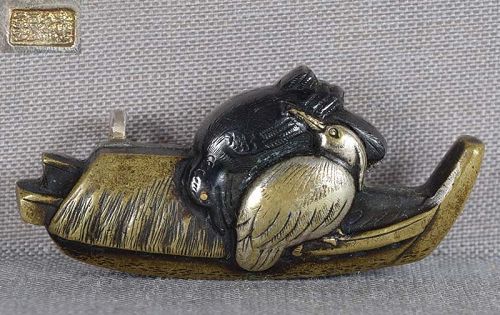
19th century Japanese mixed metal obidome (sash ornament) in a form of an egret and a crow resting on a fisherman’s boat. Obidome is worn on an obi cord that holds the obi sash together, it is the only type of jewelry worn by Japanese women on formal occasions, and could serve as netsuke as well. Excellent design, superb quality work, wonderful quality patinas and gilding, some wear as to be expected...
All Items : Antiques : Regional Art : Asian : Japanese : Netsuke and Related : Pre 1900
item #1489527
Dmitry Levit Asian Art
$65.00
$65.00
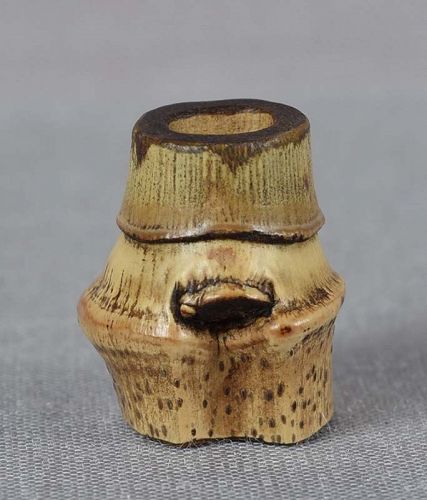
Late 19th century ojime (slide bead for tightening the cord going from netsuke to inro) made out of a section of a spotted bamboo including the node. Elegant clever design, beautiful patina. Height 0.66 inches.
All Items : Antiques : Regional Art : Asian : Japanese : Netsuke and Related : Pre 1900
item #1489526
Dmitry Levit Asian Art
$55.00
$55.00
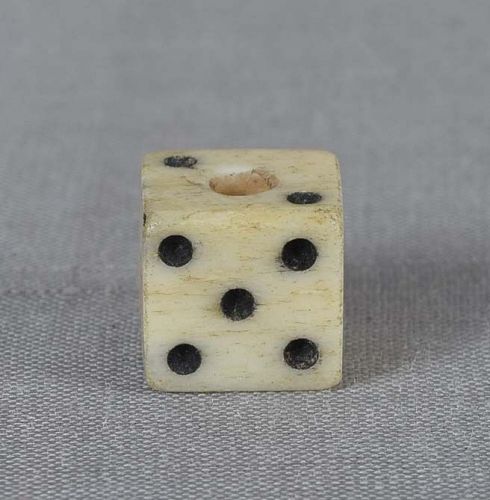
19th century staghorn ojime (slide bead for tightening the cord going from netsuke to inro) in a shape of a die with dots highlighted in black ink. Nice quality work, beautiful warm patina, some wear. Cube side 0.42 inches.
All Items : Antiques : Regional Art : Asian : Japanese : Netsuke and Related : Pre 1900
item #1489525
Dmitry Levit Asian Art
$55.00
$55.00
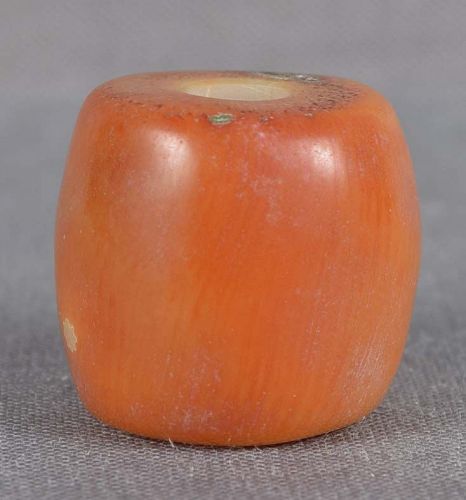
Unusual late 19th century Japanese fossilized pink coral ojime (slide bead for tightening the cord going from netsuke to inro) in barrel shape with natural features in the material. Nicely made, large central hole, pleasant patina. Height 0.73 inches.
All Items : Antiques : Regional Art : Asian : Japanese : Netsuke and Related : Pre 1900
item #1489250
Dmitry Levit Asian Art
$795.00
$795.00
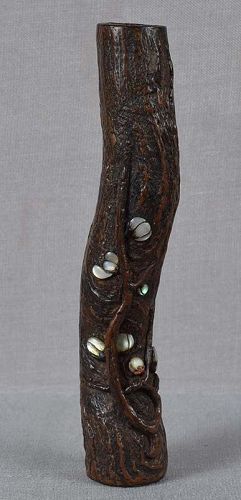
Very unusual 19th century netsuke in a shape of an old cherry trunk with a newly blooming branch. Extraordinary elegant design in Japanese taste, mother of pearl inlaid flowers with use of lacquer at their bases, excellent patina. Length 3.9 inches (99 mm).
All Items : Antiques : Regional Art : Asian : Japanese : Netsuke and Related : Pre 1900
item #1489249
Dmitry Levit Asian Art
$650.00
$650.00
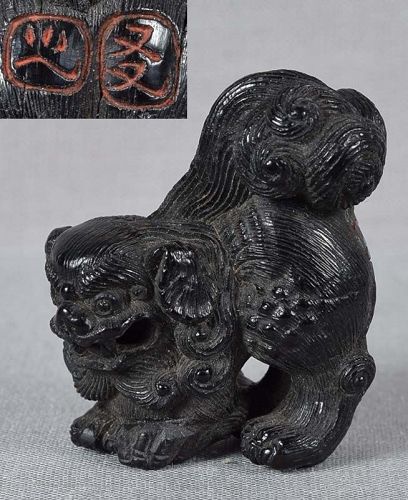
19th century kokutan (ebony) netsuke of a standing shishi (Buddhist lion), its mouth open in a snarl, the back arch and tail raised. Perfectly captured essence of the beast, fantastic depiction of its fur with different curls on different parts of its body, great patina with characteristic ebony sheen. Signed in 2 reserves on its behind - the most probable reading is SOSHIN. Extraordinary rendition of a beast. Length 1.28 inches.
All Items : Antiques : Regional Art : Asian : Japanese : Netsuke and Related : Pre 1900
item #1489247
Dmitry Levit Asian Art
$395.00
$395.00
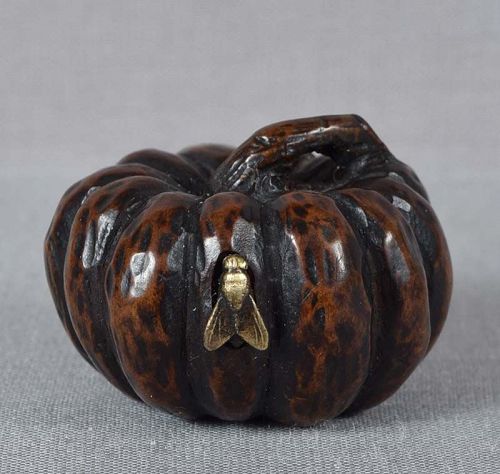
19th century netsuke of a bronze fly on a boxwood pumpkin. Elegant clever design in Japanese taste, wonderfully rendered texture of the pumpkin skin, himotoshi (cord opening) is formed by the stem, great patina. Diameter 1.31 inches.
All Items : Antiques : Regional Art : Asian : Japanese : Netsuke and Related : Pre 1900
item #1489246
Dmitry Levit Asian Art
$340.00
$340.00
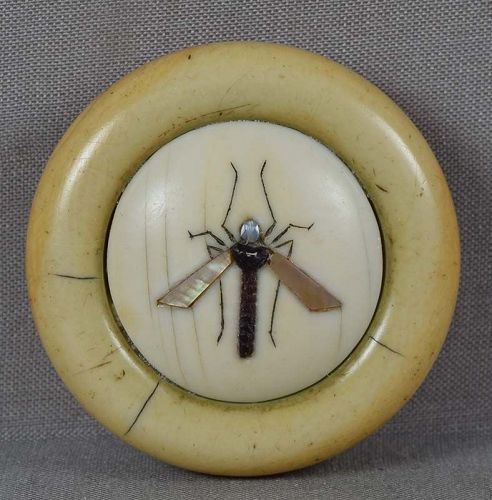
19th century kagamibuta (“mirror lid”) netsuke, its top with Shibayama inlay of a mosquito. Very rare creature in Japanese art, possibly unique unique subject in netsuke. Very well made, inlays include 2 types of mother of pearl and brown buffalo horn. Beautiful patina, swinging metal loop at the back for the cord. Diameter 1.6 inches.
All Items : Antiques : Regional Art : Asian : Japanese : Netsuke and Related : Pre 1900
item #1489245
Dmitry Levit Asian Art
$330.00
$330.00
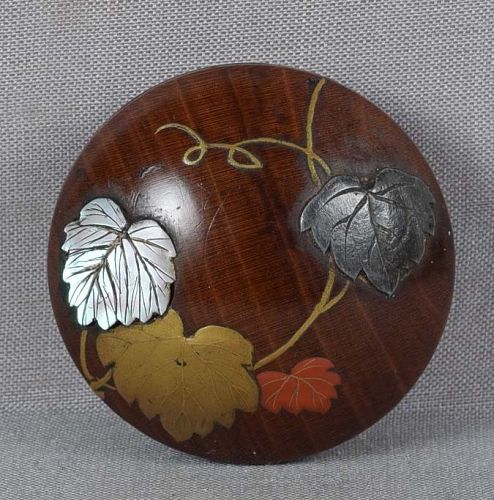
19th century wooden netsuke in manju (rice cake) shape with pewter, mother of pearl and lacquer decoration of ivy leaves on vines. Wonderful design, beautiful work, fine wood with dense texture. Diameter 1.5 inches.
All Items : Antiques : Regional Art : Asian : Japanese : Netsuke and Related : Pre 1900
item #1489198
Dmitry Levit Asian Art
$125.00
$125.00
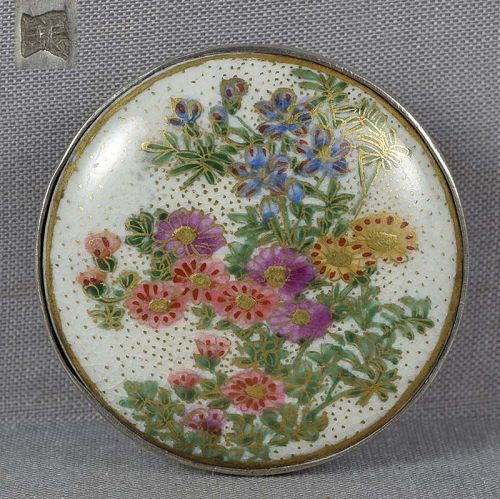
19th century Japanese silver and Satsuma obidome (sash ornament) with various blooming flowers with stems and leaves. Obidome is worn on an obi cord that holds the obi sash together, it is the only type of jewelry worn by Japanese women on formal occasions, and could serve as netsuke as well. Excellent quality painting, numerous color and gold enamels, in excellent condition, metal fitting on the back for an obi cord. Back is stamped with a single character GIN (silver). Diameter 1.48 inches.
All Items : Antiques : Regional Art : Asian : Japanese : Netsuke and Related : Pre 1900
item #1488644
Dmitry Levit Asian Art
$225.00
$225.00
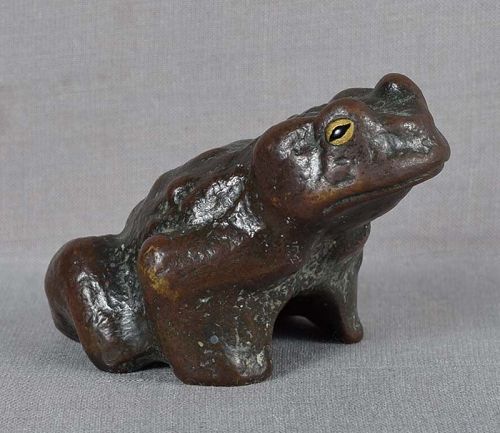
Unusual 19th century Japanese bronze scroll weight in a shape of a crouching toad. Very nice work, wonderful rendition of its warty back, eyes are lacquered in gold and black giving it lifelike quality. Appropriately heavy as a scroll weight, beautiful patina. Length 2.67 inches.
All Items : Antiques : Regional Art : Asian : Japanese : Netsuke and Related : Pre 1900
item #1488592
Dmitry Levit Asian Art
$90.00
$90.00
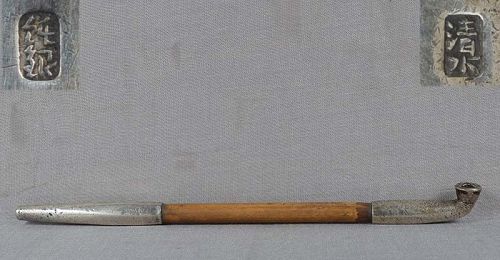
19th century Japanese pipe with simple silver smoking and mouth pieces and reed stem. Characteristic small bowl (Japanese used finely shredded tobacco, and usually made just 2-3 puffs). Smoking part is hallmarked with 2 characters reading KIYOMIZU (“pure water”), which probably refers to Kiyomizu-dera ("Pure Water Monastery”) - very famous and quite spectacular Buddhist temple in Kyoto...
All Items : Antiques : Regional Art : Asian : Japanese : Netsuke and Related : Pre 1900
item #1488380
Dmitry Levit Asian Art
$2,500.00
$2,500.00
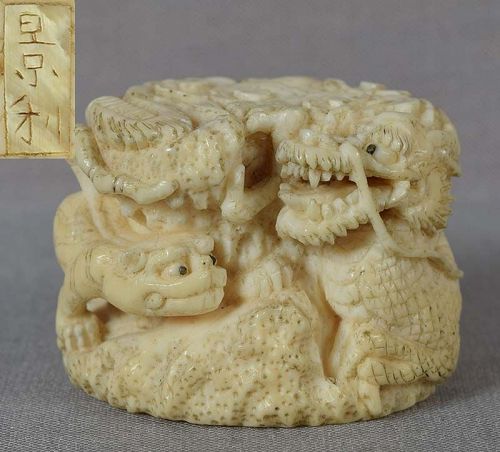
Excellent 19th century netsuke of a dragon and a tiger about to engage in a fight on a rocky outcrop under swirling clouds. Very nice pairing of two most powerful Zodiac beast, carved with supreme confidence and precision, wonderful detailing of their faces, scales, stripes and cloud textures. Eyes are inlaid with metal, beautiful wear and patina. Signed KAGETOSHI on inlaid mother of pearl rectangular reserve on the bottom - this excellent carver is discussed on p...
All Items : Antiques : Regional Art : Asian : Japanese : Netsuke and Related : Pre 1900
item #1488378
Dmitry Levit Asian Art
$1,700.00
$1,700.00
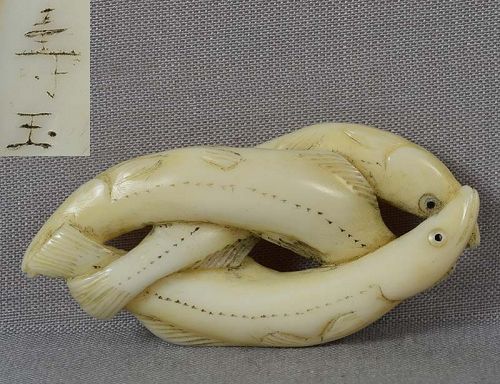
19th century marine netsuke of three shirauo (whitebait). Classic design, excellent detailed carving, eyes are double inlaid with horn and mother of pearl. Beautiful wear and warm patina, wonderful sheen to the surface. Signed JUGYOKU for Ryukosai Jugyoku on the back - for discussion of this excellent artist see p. 546 of NETSUKE & INRO ARTISTS AND HOW TO READ THEIR SIGNATURES by George Lazarnick. Length 2 .03 inches.
All Items : Antiques : Regional Art : Asian : Japanese : Netsuke and Related : Pre 1837 VR
item #1488377
Dmitry Levit Asian Art
$1,450.00
$1,450.00
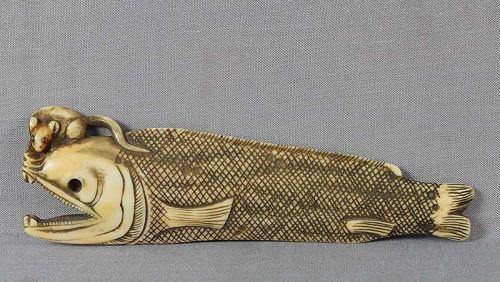
Early 19th century large netsuke depicting flat himono (dried fish - salmon in this case) with a rat gnawing at its head. Clever design, very good carving, eyes of the rodent are inlaid with brown horn, pleasant patina. Himotoshi (cord hole) goes through the mouth to the back of the netsuke. Length 4.7 inches (119 mm).
All Items : Antiques : Regional Art : Asian : Japanese : Netsuke and Related : Pre 1900
item #1488375
Dmitry Levit Asian Art
$395.00
$395.00
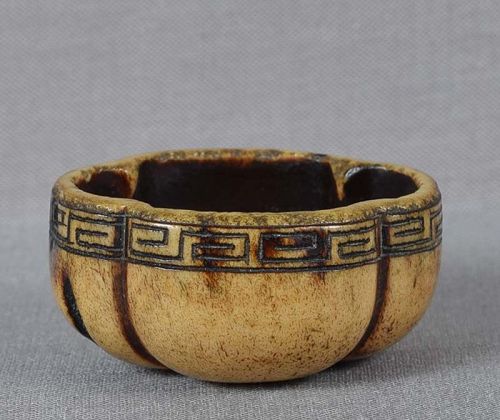
19th century Asakusa school staghorn netsuke in a form of a bowl of ogival section, decorated with an incised keyfret design along the rim. Exquisite subtle piece, one of the most elegant netsuke that I have had. Superb precise carving, warm brownish patina, brown lacquer on the inside, early himotoshi design. Natural darker porous areas of staghorn perfectly imitate scarred surface of an old ceramic bowl...
All Items : Antiques : Regional Art : Asian : Japanese : Netsuke and Related : Pre 1900
item #1488185
Dmitry Levit Asian Art
$875.00
$875.00
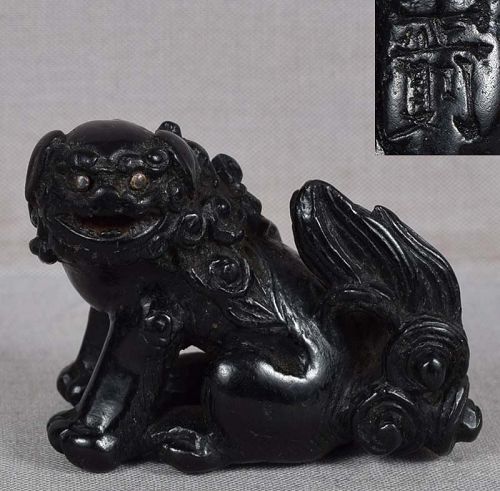
19th century kokutan (ebony) netsuke of a sitting shishi (Buddhist lion), its tail up and its head turned to the left, mouth open in a wide grin. Represented beast is definitely male both because of its explicitely carved bottom and because its mouth is open emitting sound A (the first letter of Sanskrit alphabet), while the female shishi are depicted with closed mouth emitting sound N (the last letter)...
All Items : Antiques : Regional Art : Asian : Japanese : Netsuke and Related : Pre 1900
item #1488184
Dmitry Levit Asian Art
$450.00
$450.00
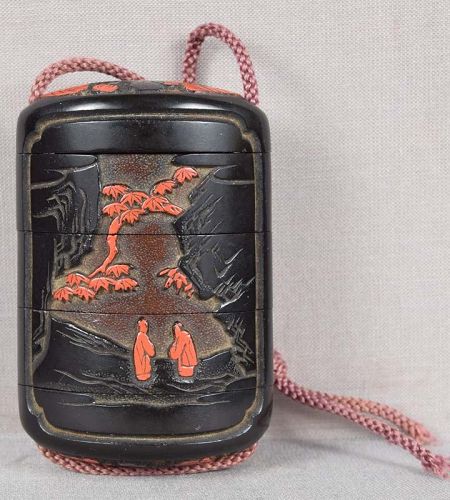
19th century small black and red Japanese lacquer 4-compartment inro with two different carved scenes of two scholars in discussion under rocks (one with waterfall cascading off it) with bamboo gracefully growing on their surfaces. Top and bottom are carved differently with peony branches with leaves and buds. Elegant dignified design, very clever and striking use of red lacquer for figures, bamboo and and some peony details. Old silk cord, in excellent condition, no cracks or losses...