


$1,200.00
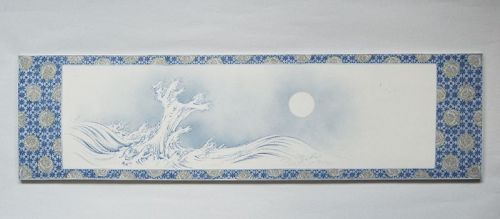
On the back are two ‘loops’ to hang the tile up.
Japan, Seto, Meiji era, 1870s-1900.
H 10.6 x W 39.25 x D 0.25 in.
Excellent condition
The tile might have been part of a wooden bench or bed, mounted as the back or head board.
Very rare.
Inquire for Price
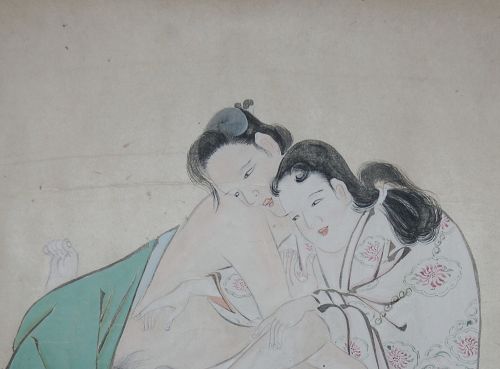
Signature at the end of the scroll, on the far-left side: Yamato-e Miyagawa Choshun zu. Gourd-shaped red seal: Choshun.
Very fine and detailed paintings in black ink, mineral colors and gofun (pulverized calcified shells) on paper. The hair and some of the garments are painted in black lacquer which has a sheen to it. The photos show the hair as gray, which is a light reflection. In reality, the hair is jet black.
The scroll consists of four pieces, joined together and laid down on thin Japanese backing paper for stability. Wooden scroll knobs. Comes with a futomaki, protective roll.
Japan, Edo period, 18th century
Height 10.75 inches, length ca. 130 inches.
More photos available upon request
Condition:
Missing areas along the lower edge, mostly in the first quarter of the scroll, few small missing spots and areas throughout the scroll, and restored tears. All of this stabilized by the background paper.
Provenance: Private collection Portland, OR, purchased from Brodney Gallery in Boston, MA
Miyagawa Choshun (ca 1683-1752) was a painter in the ukiyo-e style, founder of the Miyagawa school of painting. He lived and worked most of his life in Edo. Early on, he was influenced stylisticly by Hishikawa Moronobu, borrowing groups of figures from Moronobu’s paintings. He painted in hanging scroll format and created hand scrolls. He did not design woodblock prints.
$325.00
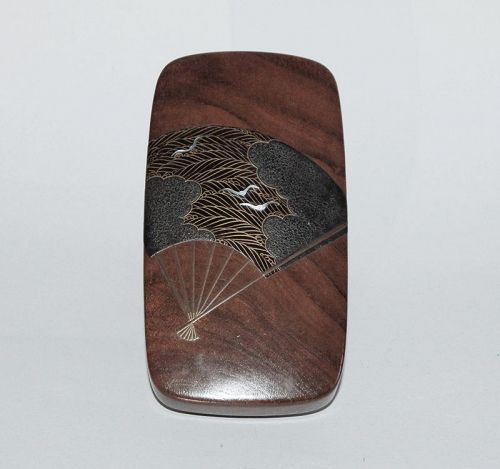
Inside, the surface is covered in thin brown lacquer, allowing the wood grain to show. The cover is signed on the inside in makie gold lacquer: Tairei.
Japan, Showa era, 1950s
1.25 x 4.3 x 2.7 in.
Minimal traces of usage on the inside of the box, overall in excellent condition
From the collection of Ed and Julie Lewis, Chicago
Takai Tairei (1880-1971) was trained in the workshop of the Imperial Artist Ikeda Taishin. He lived in the Aoyama ward of Tokyo. In his young years he made inro and pipe cases in the Zeshin/Taishin style. Later on, he produced boxes and trays with lacquer decorations directly applied on the wooden objects (kiji makie), such as the one presented here. After World War II, Tairei made his living by manufacturing lacquered jewelry: obi pins, brooches and rings, while continuing making kiji makie objects. His brother-in-law was the famous lacquer artist Akatsuka Jitoku, who was married with his elder sister Takai Kei (1877-1946).
$300.00
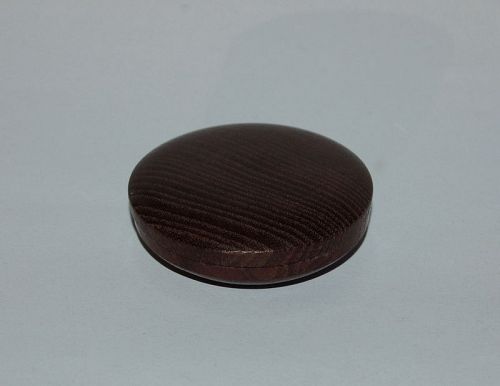
Unsigned, Japan, early to mid-19th century
H 0.75 x diam 2.55 in.
Excellent condition
Comes with an inscribed wooden storage box: Cha, marugata, kogo (tea, circular shape, incense box).
Although neither the kogo, nor the storage box is signed, the work is reminiscent of works by the Komazawa Risai family of joiners who were so skillful that they were allowed to create utensils for the prestigious tea schools, such as Omotesenke. A very similar box signed Komazawa Risai 8th was recently (2023) sold in Kyoto, Japan.
Inquire for Price
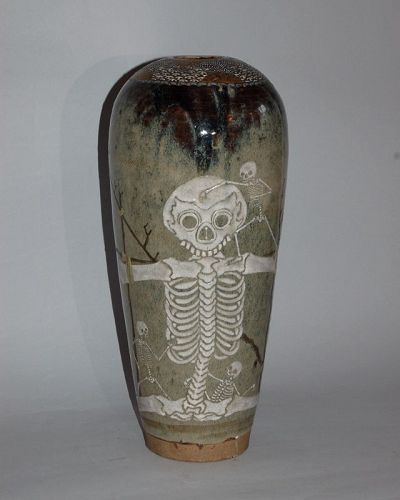
The shoulder of the vase decorated in blue, white and greenish enamels and gold with leaf-like shapes, meandering lines and dots.
Unsigned. Japan, Meiji era or later? The vase itself may be earlier than the enamel decoration
H 15 in. (38 cm)
Excellent condition
Previously in the “Memento mori” collection of Richard Harris, Chicago. The collection was on display at several locations, under the title “The Death, A Self-portrait” (2012/13 London) and “Morbid Curiosity: The Richard Harris Collection” (2012 Chicago)
Inquire for Price
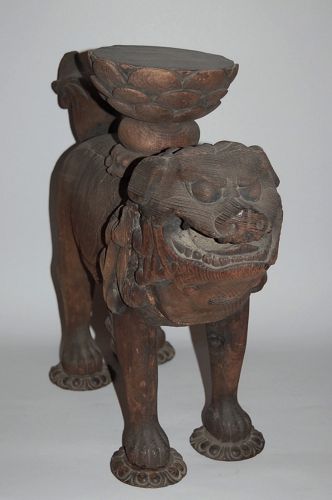
The figure has been carved out of several blocks of wood that were subsequently assembled into the final figure. This technique is called yosegi saiku and was widely used for complex sculptures like these. The tail is stuck into the back, remaining loose. The lotus base on the back is made is in two segments, loosely inserted into the back with a wooden peg.
The rather folky character of it makes it an extremely charming piece.
Japan, Muromachi period, 15/16th century.
Height 17 ½ in., length 21 in., depth 6 ½ in. (44.5 x 53 x 17 cm).
Some edges of the different blocks chipped, chip to lotus base, chips to the tips of mane on head and to hair tufts at legs, all commensurate with age. All in all in very good and stable condition.
$250.00
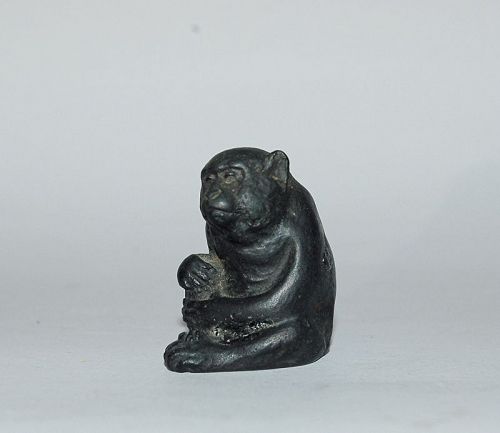
Unsigned. Stamped in the flat bottom: Yamanaka & Co. Inc., and Made in Japan.
Japan, early Showa era, 1920s-1930s.
H 1.75 x D 1.6 in.
Two small casting flaws that were repaired at the time of production.
The stamp ‘Made in Japan’ was required for objects exported to the US and other western countries in the 1920s and 1930s. The stamp of Yamanaka & Co. indicates that the piece was made for Yamanaka & Co., to be sold in one of their stores outside of Japan.
Yamanaka & Co. was founded in the 1910s by Yamanaka Sadajiro, who had come to New York in 1894 and set up a small antique store in Chelsea. In 1917 the Fifth Avenue gallery was opened, followed by branch offices in Boston, Chicago, London, Paris, Shanghai and Beijing.
$800.00
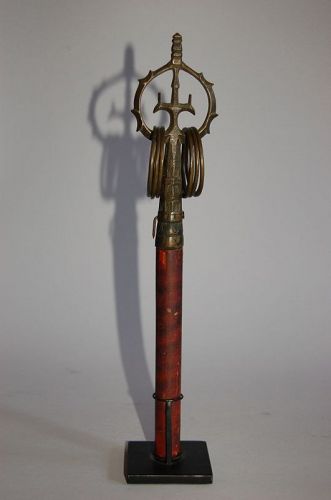
The six rings symbolize the Six Realms of Existence where Jizō is active and the Six Perfections that lead to nirvana: generosity, morality, patience, vigor, concentration, and wisdom.
Mounted on a short wooden pole, covered with red lacquer.
Cast sentoku. Japan, 19th century.
H including pole ca. 10" (25.2 cm);
H metal head only ca. 4.75" (12.3 cm).
Minimal corrosion on head, otherwise very good condition. Comes with a custom-made metal base.
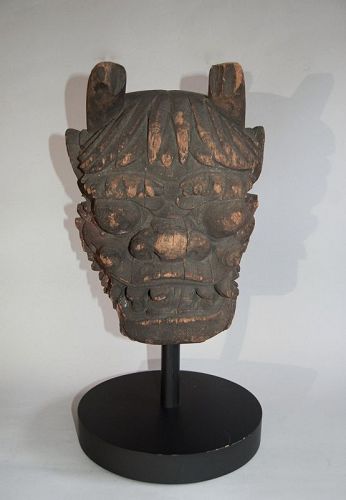
P.O.R.
Wood with remnants of polychrome pigments red, white and grayish black.
Japan, late Edo period (18th/19th century).
H mask 13 in.; H with stand 18.5 x W 9.75 in.
Mounted on a stand, sitting on a pole that has been inserted through the chin of the mask. Also metal wire across the back for hanging (attached with two small nails behind the ears).
Color pigments strongly rubbed, various scrapes and chafes, material cracks and some old damage
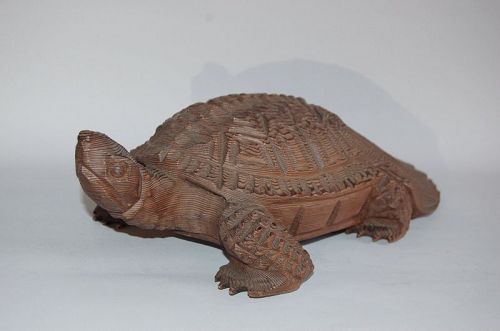
$600.00
Unsigned. Meiji era, early 20th century, Japan
L 18 x W 8.25 x H 3.75 in.
Few scuffs and dents that do not disturb the beauty of the piece.
Jindai sugi wood is old wood from the Japanese cedar that is said to be a thousand to several thousand years old, found buried in lake beds or marshes. The iron content of the wood gives it a deep grey-brown sometimes black, rich color. Most of the carvings made of jindai sugi are toads. Any other animal imaged in this wood is relatively rare.
A minogame is a turtle with long strands of algae growing from its shell. The way the algae flow down from the shell, they resemble a farmer’s raincoat made of straw, called a mino. Hence the name minogame. In order to grow such algae, the turtle is considered to be extremely old. It is considered a symbol of longevity.
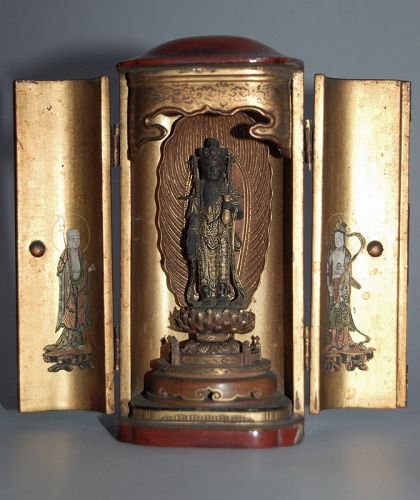
$1,500.00
Painted in mineral colors and gold onto the gilded doors are Jizo bosatsu to his right and Kokuzo bosatsu to his left.
Carved wood (probably boxwood), decorated with gold. Jewelry gilded metal (now black).
Red lacquered shrine with fine gilded hardware.
Japan, Edo period, 18th century.
Case: ca. 5.1 x 2.3 x 1.75 in. (13 x 6 x 4.5 cm).
Case with minimal wear consistent with careful handling despite age and use. Kannon covered in soot and gilding professionally repainted over the soot, probably in the late 19th century. Some metal jewelry missing. Excellent condition, very well cared for.
Kokuzo embodies wisdom and mercy. He is often paired to Jizo, whereby Jizo is responsible for Hell and Kokuzo for Paradise. The 11-headed Kannon expresses the eleven kinds of worldly power, or is honored as the bodhisattva that saves man from the eleven worldly desires.

$1,500.00
In the Meiji era this plate was additionally decorated in moriage technique with overglaze enamels that required lower kiln temperatures. Images is a warrior hare, dressed in more or less Chinese warrior dress, a spear and war-fan in his hands, a halo with three sacred jewels behind his head. He is in the company of a horned goblin with a war-club, together sitting on the back of a winged dragon-fish (Shachihoko).
Rim decorated with karakusa.
Mingei (folk art). Older ceramics, redecorated with appealing motifs were subsequently offered for sale to tourists who started traveling Japan in the Meiji era.
Japan, Edo period, 1800-1850 with Meiji era overglaze decoration.
H 2-2.25 x diam. 13.75 in.
Few underglaze chips in the rim of the platter, overpainted by the karakusa motif. The brown enamel on the dragon fish is irregular, but not flaking or chipping. All in all very good condition.
More photos available upon request
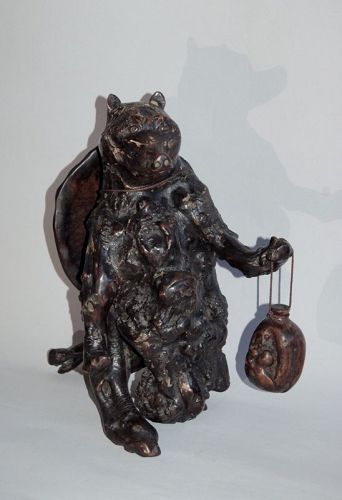
$1,600.00
Hat and sake bottle are attached to the tanuki with braided silk cords.
Mingei.
Root wood with black staining.
Japan, Meiji-Taisho era early 20th century
H 15.5 in.
Thin cracks around the neck, where the head is attached to the body. Black stain is flaking. Other small chips and thin cracks commensurate with age and materials used. All in all, still in very good condition.
More images available upon request
$1,200.00
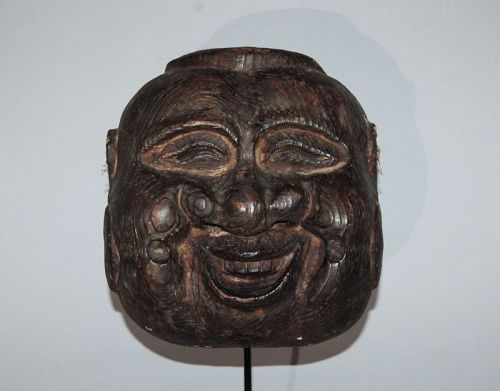
The broad grain of the wood was used to accentuate the round cheeks, nose and nostrils. The wood was formerly stained with a reddish-brown color, now almost completely worn off. Around the eyes there are remnants of a light-colored pigment.
There are two small holes in the top of the ears in which the attachment cords would have been fastened.
The mask was made perhaps for Kyogen, the comic interludes of a noh performance. Since it has folky characteristics, it may have been used in rural theaters, on village stages or by itinerant street performers.
Japan, 19th century
H 8.25 x W 7.5 in.
The mask comes with a black lacquered metal stand. H with stand 13 in.
Chips in the pigments on the front, unimportant chips in the wood on the edges on the back. All in all very good condition.

$350.00
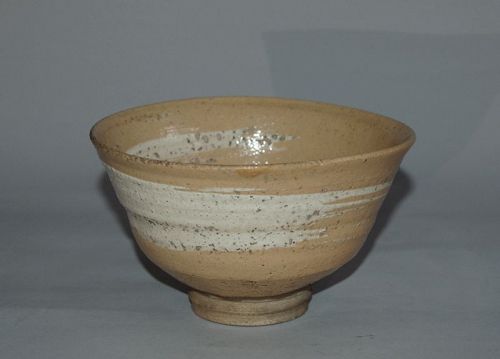
Impressed seal next to foot: Akahadayama.
Akahada ware, Japan, prob. Meiji era, 1870s
H 2.8 x Diam. 4.25 in.
Two chips on the lip that were restored with silver over red lacquer which is now worn (one partially underglaze), one very small underglaze chip, several short vertical glaze cracks along the lip commensurate with age and usage.
The three incisions in the foot are typical for Akahadayama ware.
More images available upon request
$400.00
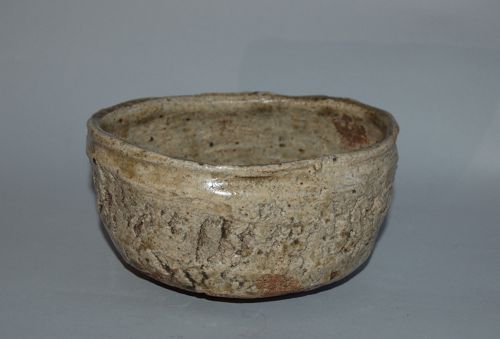
Seto region, Japan, 19th century
H 3 x W 5.25 x D 5 in.
Two unprofessionally, but lovingly repaired chips at the lip. One on the inside, one on the outside. One ‘almost’-chip on the lip with frittings. Small glaze losses on the inside and outside and more so in the hakeme. Nevertheless good piece in stable condition.
More photos available upon request
$1,500.00
Japan, Seto region, very early Edo period.
H 3 x W 5.5 in.
Excellent condition
Comes with a red silk pouch and a fitted storage box of wood, not inscribed.
Excellent size for smaller hands.
More images upon request
$950.00
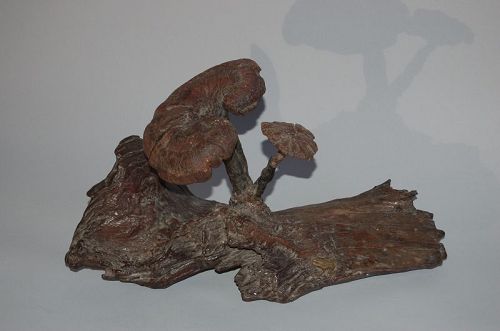
Natural piece of (drift) wood, natural mushrooms, frog of stained stag horn.
The mushrooms mounted with wire and resin.
Japan, Meiji era. Unsigned.
Ca. H 7 x W 14 x D 6 inches.
The smaller mushroom was broken off and re-attached unprofessionally.